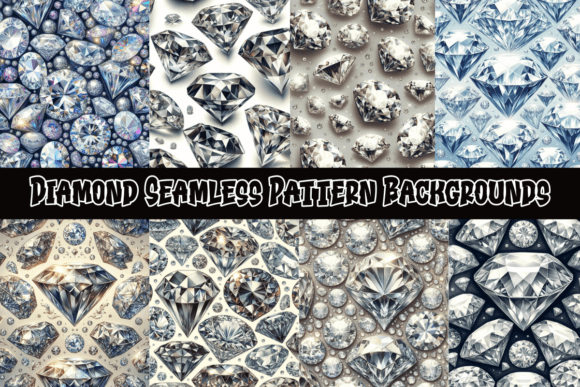
Diamond Seamless Pattern Backgrounds: Elevate Your Visuals
When you need to inject a sense of structure, luxury, or modern geometry into a design project, a standard color fill or a generic stock photo often falls flat. This is where the power of a well-crafted pattern comes into play, and the Diamond Seamless Pattern Backgrounds collection stands out as a particularly versatile and sophisticated tool. More than just a repeating shape, these patterns offer a visual language of precision and style that can transform everything from a digital interface to a physical product.
The Anatomy of a Diamond Pattern
At its core, a diamond pattern is built from the fundamental shape of a rhombus—four equal sides with opposite angles. The magic happens in how these shapes are arranged and styled. The collection features a dazzling array of interpretations. Some patterns present a clean, minimalist grid of thin lines forming a classic argyle or lattice. Others offer bold, filled diamonds that create a strong, rhythmic visual impact. You'll find designs with intricate internal detailing, hatching, or gradients that add depth and a tactile quality, making them feel almost three-dimensional.
The "seamless" aspect is the critical technical feature. This means the pattern is designed to tile infinitely in all directions without any visible seams or breaks. For a designer, this is non-negotiable. It allows you to apply the pattern to any surface area—a tiny social media icon or a full-scale event backdrop—and it will repeat perfectly, maintaining its integrity and flow. The personality of these backgrounds ranges from playful and energetic (using bright colors and irregular spacing) to elegant and formal (using monochromatic schemes and precise alignment).
Where Diamond Patterns Shine: Real-World Applications
Understanding the pattern's characteristics is one thing; knowing where to deploy it is where the real creative value lies. Think of the Diamond Seamless Pattern Backgrounds as a foundational design asset, not just a decorative afterthought.
For Brand Identity and Marketing
A subtle, textured diamond pattern can become a key element of a brand's visual identity. Used on business cards, letterheads, or as a website background, it communicates attention to detail, structure, and modernity. For a tech startup, a sharp, digital-looking diamond grid suggests innovation and connectivity. For a boutique jewelry brand, a softer, more ornate diamond pattern can evoke luxury and craftsmanship. In marketing materials—think email headers, webinar slides, or promotional flyers—a well-chosen pattern adds visual interest without overwhelming the core message, guiding the viewer's eye in an organized way.
Digital and Editorial Design
In the realm of web design and social media graphics, these patterns solve a common problem: creating engaging backgrounds that don't compete with text or product images. A faint, low-contrast diamond pattern behind a product shot on an e-commerce site adds sophistication. For a blogger's Instagram story or a YouTube channel banner, a bolder pattern in brand colors creates immediate recognition. In editorial design, such as magazine layouts or annual reports, diamond patterns can be used as section dividers, pull-quote backgrounds, or infographic elements, adding a layer of professional polish.
Physical Products and Craft
The applications extend far beyond the screen. For entrepreneurs and crafters, these seamless patterns are a gateway to creating unique packaging design, custom textiles, and stationery. Imagine a gift wrap with a delicate gold-on-navy diamond pattern, or a notebook cover with a vibrant, modern take. For small business owners, using a consistent pattern across product packaging, shopping bags, and thank-you cards builds a cohesive and memorable brand identity that customers will recognize. The pattern's versatility allows it to scale from a small label to a large tote bag with perfect clarity.
Working with Patterns: Practical Guidance
Integrating a pattern effectively requires a thoughtful approach. Here’s how to get the most out of the Diamond Seamless Pattern Backgrounds collection.
Evaluate the Project's Voice: Before selecting a pattern, define the project's tone. Is it formal or casual? Technical or organic? A dense, symmetrical diamond grid fits a financial report, while an irregular, hand-drawn-style diamond pattern might suit a indie craft brand. Always test the pattern in context—place your logo, text, and key imagery over it to ensure it enhances rather than distracts.
Master Color and Scale: The impact of the pattern changes dramatically with color and scale. A pattern in a single, muted tone creates a subtle texture. Using two contrasting brand colors makes it a dynamic feature. You can also control the scale of the pattern in your design software. Scaling it down creates a fine, detailed texture, while scaling it up turns it into a bold graphic statement. Always ensure the pattern remains crisp and clear at the intended output size, whether for a tiny favicon or a printed poster.
Font Pairing and Hierarchy: A busy pattern demands careful typographic choices. Pair it with clean, highly legible sans serif fonts for body text to ensure readability. For headlines, you can use a strong display font or a contrasting serif font that stands out. The key is to establish a clear visual hierarchy: the pattern is the background texture, your text is the foreground message. Use solid color blocks or semi-transparent overlays behind text areas if needed to guarantee clarity.
Licensing and Consistency: When using these patterns for commercial work, always verify the licensing terms. Ensure they cover your intended use, whether for client projects, merchandise, or digital products. Once you select a pattern for a brand, use it consistently across all touchpoints. This repetition builds recognition and reinforces the brand's aesthetic, turning a simple geometric motif into a powerful component of your brand identity.
The Diamond Seamless Pattern Backgrounds collection is more than just a set of files; it's a toolkit for adding depth, organization, and stylistic flair. By understanding its inherent qualities and applying it with strategic intent, you can create designs that feel both professionally crafted and uniquely engaging, capturing attention in a crowded visual landscape.